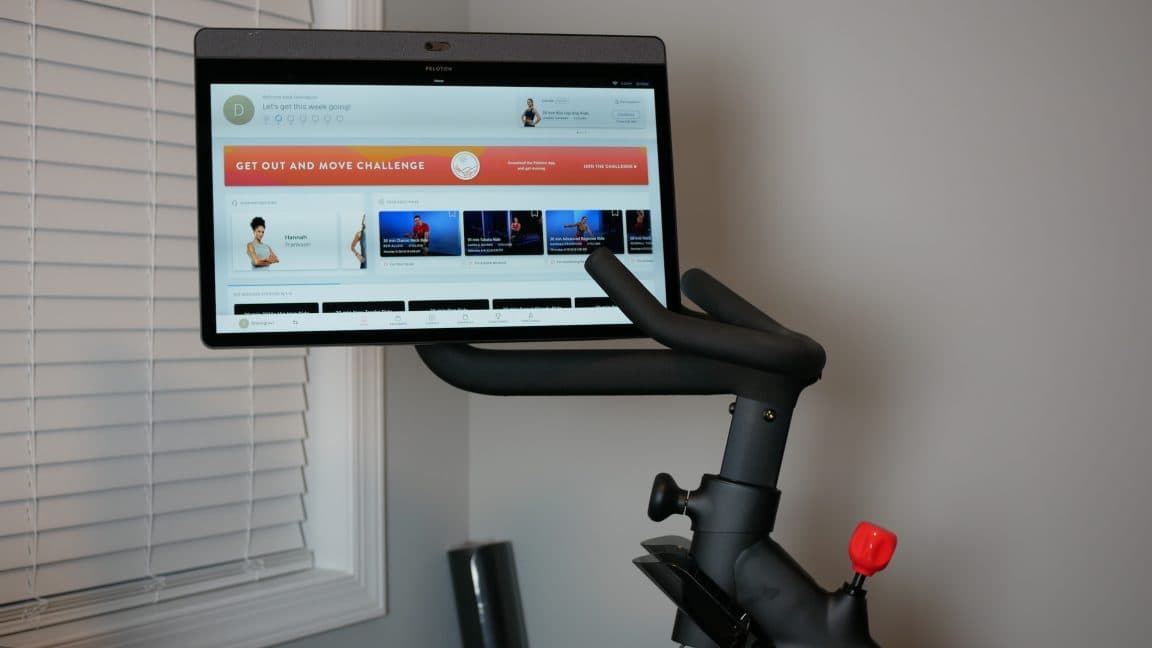
Specific capabilities and how they work, summarized from public product & technical records.
12 capabilities
Motorized magnetic resistance measurement
2021–2025
A motor moves magnets around the flywheel to change pedaling resistance. A load cell and other sensors let the bike calculate resistance and rider power.
Asymmetric bicycle resistance control
2022–2024
The work concerns applying unequal resistance under different exercise conditions. The available metadata does not explain what is asymmetric or establish that it follows instructor cues.
Exercise bicycle exterior design
2021–2024
This patent protects the visual design of an exercise bicycle. The drawings would be needed to distinguish its precise model and ornamental details.
Handle mounted exercise controls
2021–2024
Controls incorporated into exercise-equipment handles let users adjust equipment while maintaining their grip. The cycling classification suggests a bike application, but the absent abstract limits identification of the exact controls.
Wearable heart rate measurement
2021–2023
This work concerns a wearable device that measures heart rate during exercise. The classifications also indicate features for mounting the sensor and presenting readings.
Connected equipment display styling
2023–2024
This patent protects the appearance of a display. It does not establish software behavior, screen rotation, or other functional features.
How Peloton Bike+ evolved
Key product launches, updates, and underlying technology milestones.
NAVIGATION WITHIN A GAMING ENVIRONMENT ASSOCIATED WITH AN EXERCISE MACHINE
The filing concerns navigation through a game connected to exercise equipment. Without an abstract, the exact controls and navigation rules cannot be determined.
The bike measures brake temperature and adjusts resistance or reported power to account for heating during a workout. Related structures provide brake locking.
BRAKING SYSTEMS AND METHODS FOR EXERCISE EQUIPMENT
A motor moves magnets around the flywheel to change pedaling resistance. A load cell and other sensors let the bike calculate resistance and rider power.
NAVIGATION WITHIN A GAMING ENVIRONMENT ASSOCIATED WITH AN EXERCISE MACHINE
The filing concerns navigation through a game connected to exercise equipment. Without an abstract, the exact controls and navigation rules cannot be determined.
MODIFYING OPERATION OF AN EXERCISE MACHINE DURING A CONNECTED FITNESS EXPERIENCE
The bike automatically changes resistance when a class moves into a new power zone. Instructor cues synchronized with the class video drive those adjustments.
ASYMMETRICAL RESISTANCE SYSTEMS AND METHODS FOR EXERCISE EQUIPMENT
The work concerns applying unequal resistance under different exercise conditions. The available metadata does not explain what is asymmetric or establish that it follows instructor cues.
OPERATING AN EXERCISE MACHINE DURING AN ONLINE GAME
The exercise machine changes settings when the rider or runner reaches particular areas in a game. This lets game events trigger automatic machine adjustments instead of requiring manual changes.
The bike measures brake temperature and adjusts resistance or reported power to account for heating during a workout. Related structures provide brake locking.
HANDLE CONTROLS SYSTEMS AND METHODS FOR EXERCISE EQUIPMENT
Controls incorporated into exercise-equipment handles let users adjust equipment while maintaining their grip. The cycling classification suggests a bike application, but the absent abstract limits identification of the exact controls.
A hinge built into the screen housing lets the display rotate relative to its mount. Friction or a releasable lock holds the screen at the chosen angle.
MODIFYING OPERATION OF AN EXERCISE MACHINE DURING A CONNECTED FITNESS EXPERIENCE
The bike automatically changes resistance when a class moves into a new power zone. Instructor cues synchronized with the class video drive those adjustments.
BRAKING SYSTEMS AND METHODS FOR EXERCISE EQUIPMENT
A motor moves magnets around the flywheel to change pedaling resistance. A load cell and other sensors let the bike calculate resistance and rider power.
This work concerns a wearable device that measures heart rate during exercise. The classifications also indicate features for mounting the sensor and presenting readings.
OPERATING AN EXERCISE MACHINE DURING AN ONLINE GAME
The exercise machine changes settings when the rider or runner reaches particular areas in a game. This lets game events trigger automatic machine adjustments instead of requiring manual changes.
ASYMMETRICAL RESISTANCE SYSTEMS AND METHODS FOR EXERCISE EQUIPMENT
The work concerns applying unequal resistance under different exercise conditions. The available metadata does not explain what is asymmetric or establish that it follows instructor cues.
BRAKING SYSTEMS AND METHODS FOR EXERCISE EQUIPMENT
A motor moves magnets around the flywheel to change pedaling resistance. A load cell and other sensors let the bike calculate resistance and rider power.
HANDLE CONTROLS SYSTEMS AND METHODS FOR EXERCISE EQUIPMENT
Controls incorporated into exercise-equipment handles let users adjust equipment while maintaining their grip. The cycling classification suggests a bike application, but the absent abstract limits identification of the exact controls.
ASYMMETRICAL RESISTANCE SYSTEMS AND METHODS FOR EXERCISE EQUIPMENT
The work concerns applying unequal resistance under different exercise conditions. The available metadata does not explain what is asymmetric or establish that it follows instructor cues.
This work concerns a wearable device that measures heart rate during exercise. The classifications also indicate features for mounting the sensor and presenting readings.
HANDLE CONTROLS SYSTEMS AND METHODS FOR EXERCISE EQUIPMENT
Controls incorporated into exercise-equipment handles let users adjust equipment while maintaining their grip. The cycling classification suggests a bike application, but the absent abstract limits identification of the exact controls.